At Desi Drag Disaster-Piece this past Thursday, April 9, the excitement of Jewett Auditorium was palpable. Hosted by Dean Shih and the Indian Students’ Association (ISA), Desi Drag Disaster-Piece captured the uncertainties, fear, dynamism and freedom of South Asian queer experiences through presentation and performance.
The event opened with a message of introduction from the co-Presidents of ISA, Saanvi Rungta ’26 and Deeksha Gupta ’26. “The ISA is a community for those [of] Indian descent, and those who are curious about our culture. Our goal is to reflect the diversity and richness of the country here at Wellesley”, said Rungta. A perfect depiction of this vibrancy was in the following presentation by drag artist Ruafza.
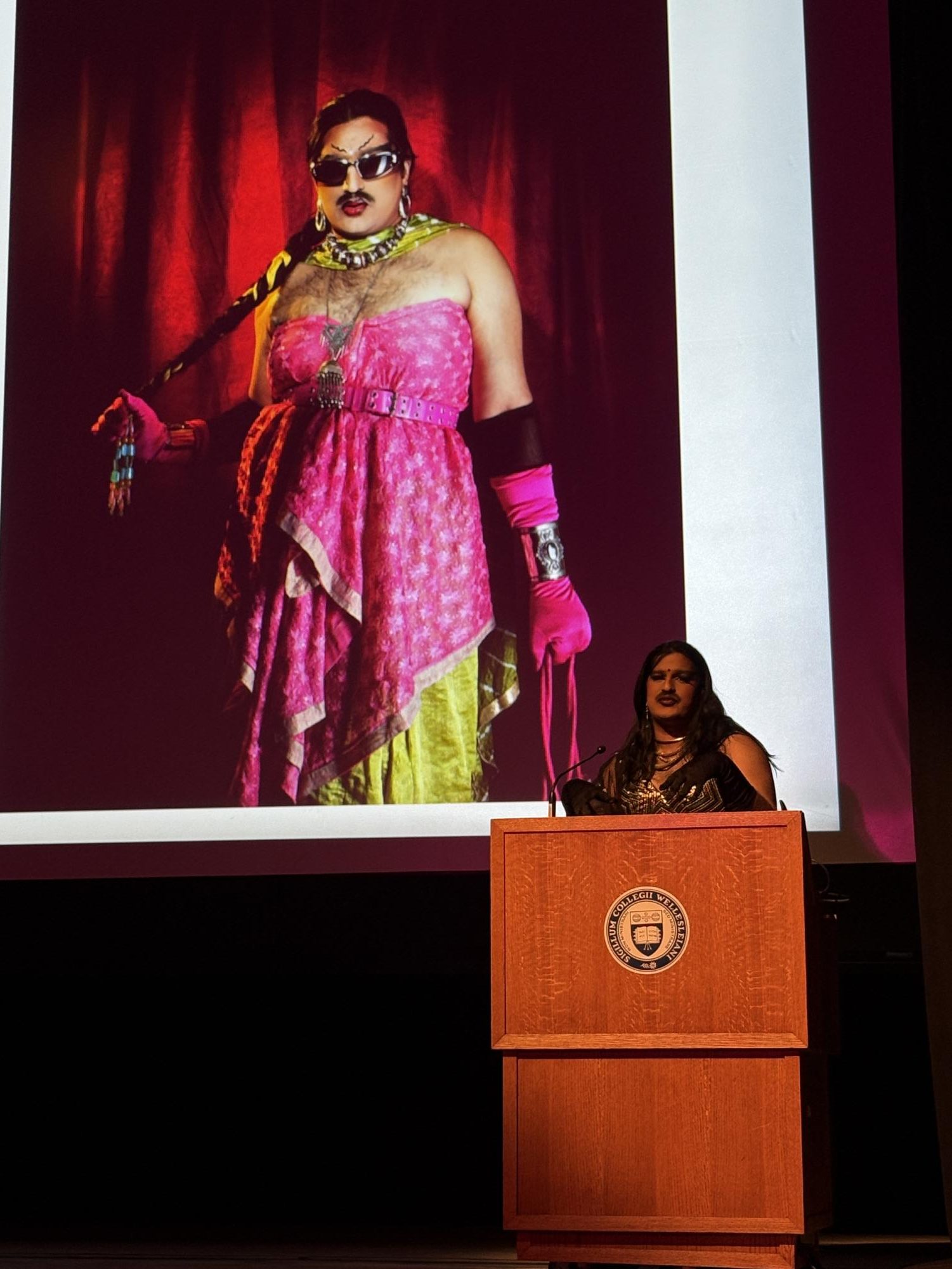
Ruafza, donned in a gorgeous black and gold lehenga, began her presentation with a short introduction. She is a drag performer, artist, designer and stylist who immigrated to the U.S. from India in 2018. As New York’s self-proclaimed “worst drag queen,” they are inspired by “queer failure.” Uninterested in being the best, Ruafza shows that even the “worst Desi drag queen” sells out shows, entertains the audience and is an electric performer. Her drag name is inspired by Rooh Afza, a popular rose-flavored drink in South Asia and the Middle East, translating to “soul refresher,” a symbol of what Ruafza aims to accomplish with her art.
Throughout their presentation, Ruafza highlighted the ways in which her work is both entertaining and political. These ideas coalesce into much of her art and performance — with “bad drag,” Ruafza’s intention is to separate the real lives of showgirls from their capitalist depiction and use. Much of her work is focused on “item girls,” a popular character archetype in Bollywood cinema, who are a manifestation of the male fantasy and appear halfway through films to titillate the male audience. She emphasizes that this depiction of female empowerment, via women claiming sexual agency, is limited to the privileged women of Bollywood but must be extended to local sex workers.
Ruafza’s own idea of a showgirl moves away from the recent “corporatification” of the term – they want to highlight the beauty and sexiness of fat, trans bodies, and uplift more members of her community of drag performers.
A short Q&A session followed the presentation, where Ruafza delved deeper into both her personal and professional journey with drag performance. They started drag in college at Tufts University, though their experiments with gender subversion began during childhood, with borrowed clothing and secret performances. After graduating, Ruafza moved to Brooklyn, where they performed at nightclubs, open mic nights and set nights.
“How do you find a way to make your art weirder and more outlandish?” asked a student in the audience. Ruafza believes that the best way to “make wacky shit!” is to create art that is weird not to a cishet white audience, but to queer people. By watching other people create weird art, she advised, one can become inspired to make something they love weirder and weirder. This is especially important to her process, since having the space to create and express weird, imperfect art is the path to having a “queer, POC-centric future.” For Ruafza, embarking upon this journey was sparked by an unwillingness to be boxed into either of two categories of queer people – the “representation” or the “oppressed.” Resonating with neither, Ruafza has worked with a myriad of queer and POC artists to depart from these stereotypes.
After a moving presentation and thunderous round of applause, Ruafza put on several drag performances, which were sexy, funny and incredibly interesting. The first of these incorporated songs from Lorde’s discography and iconic audios of Pooja Mishra, a contestant on Indian reality show “Bigg Boss” and a viral internet icon.
With cheers and applause radiating from the auditorium, Ruafza ended her performance with a piece about goodbyes, using well-known Indian and American songs, dialogues and jokes. Her performances embody an Indian-American and immigrant experience, with a multitude of cultural references and appreciation.
Desi Drag Disaster-Piece served as a perfect representation of the unique queer, immigrant and South Asian experience, becoming both a platform for reflection and celebration.
Contact the editors responsible for this story: Chelsea Tarringer