On April 30, the last day of classes (LDOC), the Schneider Board of Governors (SBOG) hosted its annual spring LDOC concert, headlined by Chuwi, a Puerto Rican musical quartet and the first Spanish-language artists to perform at the college. Announced earlier in a campus-wide email by SBOG, the performance marked a significant moment for representation on campus, especially for Spanish-speaking students, Puerto Rican students, and the broader Latine community. This announcement incited positive reactions from several students.
“Never once did I think that in my time at Wellesley would I have had the privilege to experience the first Spanish-speaking Latino artist at Wellesley but also the fact that they’re Boricua as well,” mentioned Dalice Rodriguez Viera ’26, adding that it was “un sueño hecho realidad.” (“A dream come true.”)
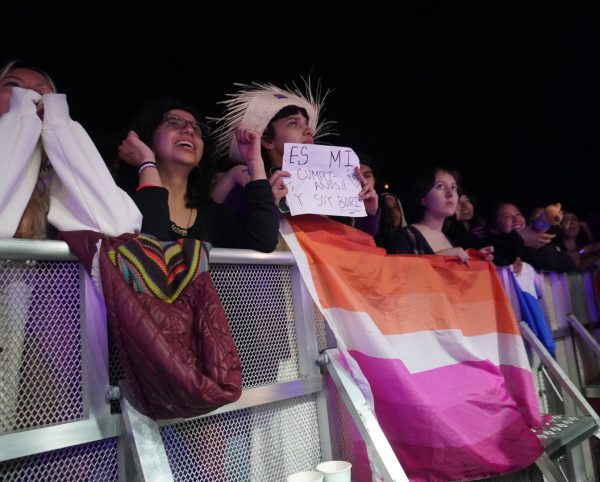
In anticipation of Chuwi’s arrival, another Wellesley student, Bianca Félix Feliciano ’27, stated, “I was forcing all my friends to listen to their music. The week before, I bought a bunch of little flags and I dispersed them from the crowd.”
Hailing from Isabela, a coastal municipality in the northwestern side of the island, the quartet is made up of three siblings, Lorén Aldarondo, Wilfredo “Willy” Aldarondo, and Wester Aldarondo, along with Adrián López, a family friend they met in high school. López would bring a wooden box drum to the school cafeteria and start playing with everyone there, and the siblings remembered him as “un vacilón” (“a vibe”). For a while, the trio made music without performing live until they received a call from a friend named Victor Blue, who pushed them to put on a live show. In need of a percussionist, they thought of López, and that is how they became a band of four.
The group spoke affectionately about how their side of the island is defined by its silence and quiet way of life: “las cosas cierran a las 10 de la noche. So, usualmente las personas que vienen allí trabajan, viajan a lo mejor hacia otro pueblo, entonces regresan a sus casas y todo el mundo se va a dormir para despertar. Como que es mucho más lenta la vida.” (“things close at 10pm. So, usually the people who come there work, travel maybe to another town, then return to their homes and everyone goes to sleep to wake up the next day. It’s like life is much slower.”) Lorén Aldarondo said. She added that this quietness gives them space to reflect and serves as inspiration for their musical projects.
The group’s sonic landscape is difficult to narrow down to a single sound, as it encompasses a wide range of influences, including Afro-Caribbean rhythms such as bomba, plena, salsa, and merengue, as well as other genres like indie, jazz and pop. Nevertheless, their distinct musical repertoire reached the ears of Puerto Rico’s biggest star, Benito Antonio Martínez Ocasio, also known as Bad Bunny, who asked them to collaborate on a song for his newly released album, DeBÍ TiRAR MáS FOToS.
“Enterarnos que él escuchaba nuestra música y que quería colaborar con nosotros fue como absurd, tú sabes, no tenía sentido,” (“Finding out that he listened to our music and wanted to collaborate with us was like absurd, you know, it didn’t make sense,”) Wester Aldarondo commented. After several months of back and forth between the group and Bad Bunny’s team, weeks of late-night studio sessions, and anxious waiting in between, the track now known as “WELTiTA” was created. It is the fifth track on Bad Bunny’s sixth solo studio album, DeBÍ TiRAR MáS FOToS. His most successful and record-breaking album, it made history as the first Spanish-language album to win Album of the Year at both the Grammys and Latin Grammys. The song “WELTiTA” is Chuwi’s most listened-to track, with over 533 million streams on Spotify. It is a catchy, romantic, beach-themed song about “dar una vuelta por la playita,” (“take a stroll on the beach,”) where Chuwi’s verse mentions a very specific cultural reference, “El Pozo de Jacinto,” (“Jacinto’s Well,”) a mythical cave in Isabela, the group’s hometown.
This collaboration inevitably propelled them to the global stage, leading to performances at the Latin Grammys, their NPR Tiny Desk debut, and appearances at Bad Bunny’s No Me Quiero Ir de Aquí residency in Puerto Rico, in addition to serving as the official opening act on the singer’s world tour.
When asked about working with Bad Bunny, Wester Aldarondo affectionately spoke about how “Es como que la persona más normal que tú puedes conocer en tu vida.” (“He’s like the most normal person you could ever meet in your life.”) and added that when working with him, you can tell that he feels the music too.
When asked about being the first Spanish-language artists to perform at Wellesley, Lorén Aldarondo noted that Karol G, who recently became the first Latina headliner of Coachella, felt that the milestone came late in the festival’s 27-year history. Echoing similar sentiments, Aldarondo stated that it is “a little shocking” that it took this long at Wellesley, adding that “it feels like a huge honor y hopefully como que seamos realmente como que una puerta que se abra bien para todos los demás.” (“it feels like a huge honor and hopefully like we are really like a door that opens well for everyone else.”)
When Chuwi was officially announced as the LDOC concert artist at Wellesley, students quickly took to Sidechat, an anonymous social media application for college students to express their opinions. Abagail Bertig ‘27, the concert chair for SBOG, observed that the reaction, which initially included positive responses, shifted to more negative commentary about the chosen artist.
“I saw a lot of people excited at first (…) and then I saw everyone just be like ‘we don’t know them, we don’t know this group, why would we want them?’” Bertig ‘27, noted.
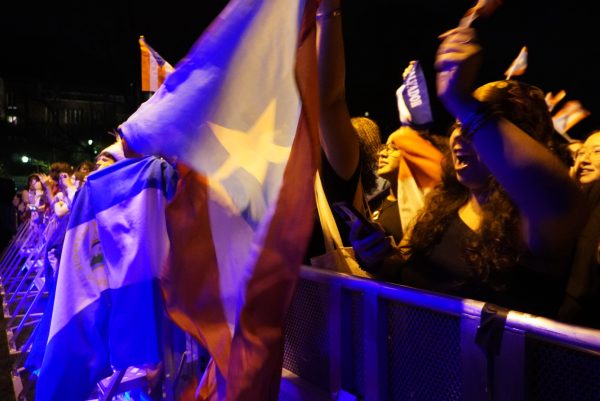
Bertig also expressed disappointment at the reaction to Chuwi being a Spanish-language group, with people stating, “I don’t speak Spanish, why would I go to this concert,” which echoed similar sentiments of frustration that many conservative voices expressed when Bad Bunny became the first artist to headline a Super Bowl halftime performance primarily in Spanish. “We’re saying the same stuff that we bash conservatives about when like everyone was talking about like the Super Bowl but now we’re just saying it like it’s the same stuff,” she added.
Dalice Rodriguez Viera also expressed how certain commenters on Sidechat mentioned that they would have been satisfied with artists like Bad Bunny, Shakira, or Jennifer Lopez. She emphasized how Latino work, music, and overall experience are often seen as less than when people are not familiar with them.
Discourses like these highlight a larger conversation about the politicization of Spanish in the United States and the Puerto Rican identity relative to the U.S. mainland as a U.S. colony. Bianca Félix Feliciano ‘27 expressed how “ecstatic” she was “about the fact that they were singing in Spanish” because she “felt like it was really important to our identity as a Spanish-speaking territory”.
The group itself was formed in 2019 amid a highly politicized moment in Puerto Rico–the “Ricky Renuncia” (“Ricky, Resign”) protests–in which mass demonstrations forced Governor Ricardo Rosselló to resign after leaked Telegram messages revealed misogynistic, homophobic, and inhumane comments from top officials.
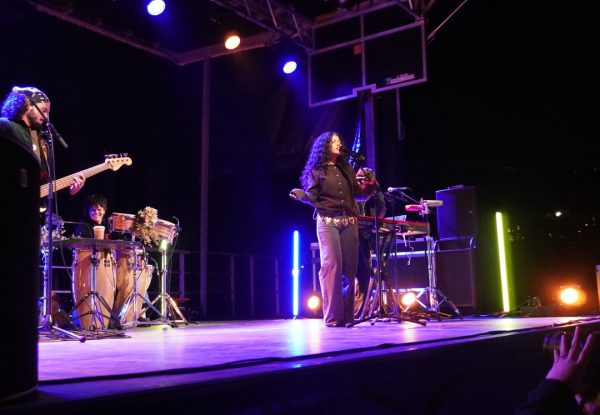
In their music, Chuwi’s lyrics do not shy away from highlighting the social and political anxieties felt by Puerto Ricans across the diaspora, with themes such as forced migration, Puerto Rican independence, and ecological destruction. They extended this political conversation during Wellesley’s LDOC concert as well, pulling out the black-and-white Puerto Rican flag, a symbol of protest against U.S. colonial rule, and raising a tambourine with a miniature Palestinian flag, connecting the Puerto Rican struggle to a broader anti-colonial context.
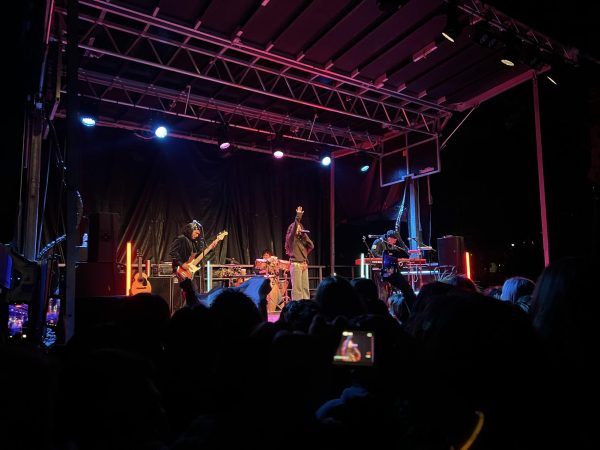
In speaking about the politics of Puerto Rico, Lorén Aldarondo referenced the strikes taking place across all 11campuses of the University of Puerto Rico, the island’s public university system. These student-led movements have emerged in response to a deep budget crisis and ongoing issues with governance. After their performance on Thursday, the group was set to perform near the University of Puerto Rico at Mayagüez for the Justas Fest 2026, an event taking place in Mayagüez, home to one of the 11 campuses in the public university system. Aldarondo reflected on the contrast between being at Wellesley, an elite institution with strong infrastructure and stability, and returning to perform near a university facing instability, describing the experience as “dystopian.”
Despite initial discontent expressed by certain members of the Wellesley community, the crowd was ecstatic for Chuwi. Abagail Bertig mentioned how, in contrast to previous years, she sensed that the crowd was more excited. She recalled how as she gave a speech on stage, she struggled to get a single word in through from the “constant screams” of excitement. Then, Chuwi came with an electric performance, serenading the crowd with Lorén’s beautiful voice, Adrián’s enthusiastic drumming, Wester’s energetic rapping, and Wilfredo’s atmospheric electric guitar sounds—all set over a crowd of enthusiastic students waving miniature Puerto Rican flags, shouting “boricua” every chance they got and dancing to the catchy, genre-bending tunes of the band’s music.
Looking toward the future, the group spoke about their upcoming projects, including working on a new album, but they also emphasized staying rooted in the same intentions that shaped their music from the beginning: “Seguir hablando de nuestras experiencias, seguir divirtiéndonos con la música porque para eso empezamos, para divertirnos.” (“Keep talking about our experiences, keep having fun with the music because that’s why we started, to have fun.”), a philosophy embodied in their performance that Thursday evening.
Contact the editor in charge of this article: Mars Halvaksz