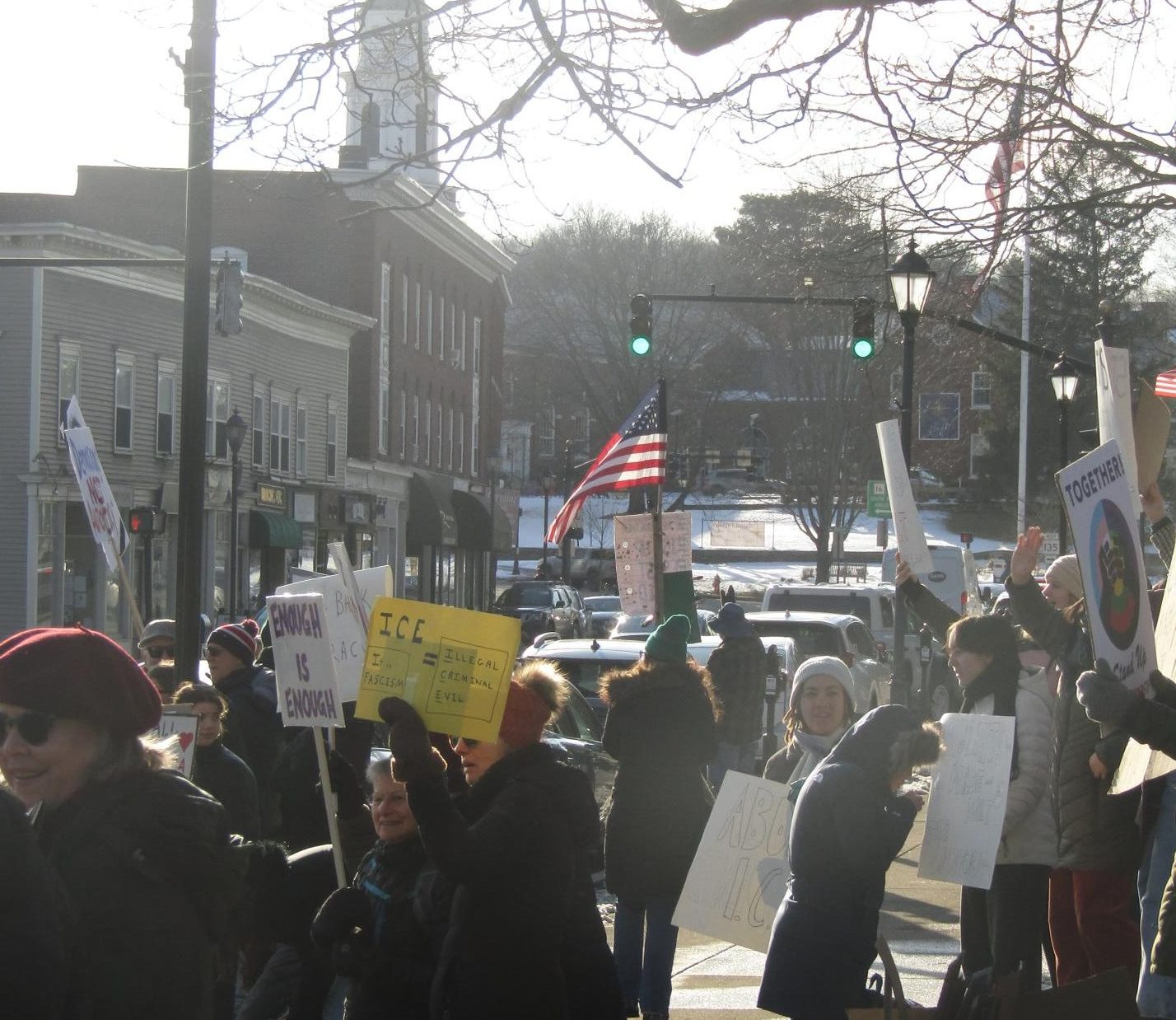
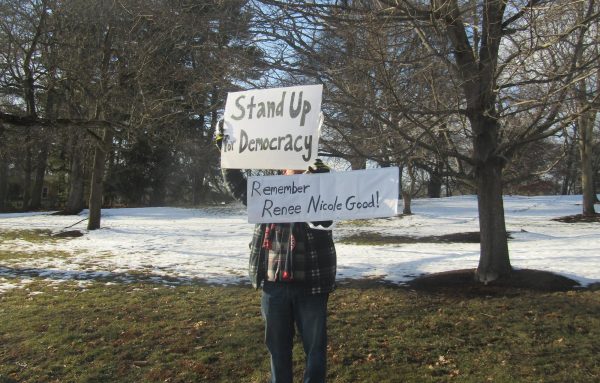
Helen O’Conner ’71 never used to “talk politics.” That was before a U.S. Immigration and Customs Enforcement (ICE) officer shot and killed U.S. citizen Renee Good in Minneapolis on Jan. 7, igniting statewide protests. Since the shooting, the Wellesley resident’s habits have changed.
Now, a growing list of fellow Wellesley residents asks her when the next protest is. O’Conner attends every protest she can, including one this past Friday afternoon, Jan. 23, at the Wellesley Town Hall.
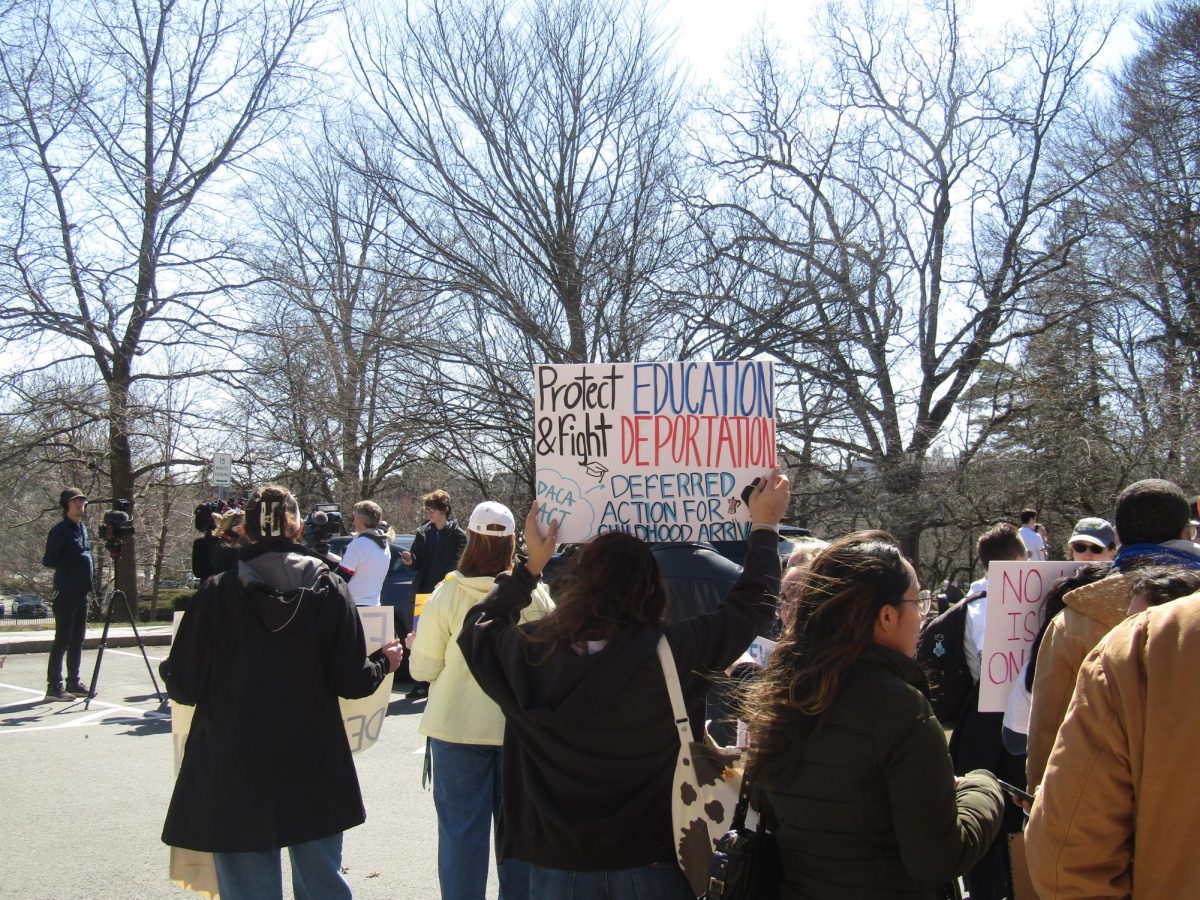
Individuals from Wellesley and surrounding towns, some affiliated with the League of Women Voters, Wellesley Democratic Town Committee and Indivisible chapters in the town, coordinated the rally, which primarily focused on solidarity with the Minnesota protestors.
Chants, car horns and music filled Wellesley’s Central Street. A growing crowd of Wellesley residents, community members and students received consistent support from passing vehicles as protestors waved signs with bold letters, chanting “No more violence, no more lies, time for ICE to say goodbye.”

Even thousands of miles from home, some demonstrators — originally from Minnesota — were personally affected by the ICE activity in their home state.
“My mom, when she goes to church — [a] predominantly Hispanic church — usually there’s like 300 people there. Now, because people are scared to leave their homes, there’s been 40, maybe 30 people showing up,” said Sophia Trabuco ’29. “It really feels like a reckoning is happening.”
“It pains me to think about the area that I grew up in being occupied like that,” said Wellesley resident Anna Hayek, whose sister works in the Minnesota public school system.
Even more protesters showed up that afternoon in solidarity, despite not being personally impacted by ICE raids in Minnesota.
“It’s so important to come out and support the other people and their causes, especially as the government becomes more of a dictatorship,” said Ellen Schmidt ’28. “They’re not gonna just stop at Minnesota … Even if it’s not directly affecting us right now, we need to stand up.”
Standing by a table of free pins and signs, Sarah Little, a Wellesley resident who helped organize earlier protests against ICE and the Trump administration, agreed that the spread of ICE raids is inevitable.
“It’s just focused in Minnesota right now. But we’re on the list. Every state is on the list,” she said.
Liv Parsons ’29, the outreach chair of Young Democratic Socialists of America (YDSA), who organized student attendance along with The Wellesley College Democrats, mentioned that protests related to immigration are now a big priority, especially after Babson student Any Lucia Lopez Belloza was deported late last year.
“[It is] incredibly inspiring to see how the people of Minnesota are standing up,” said Parsons. “I hope that if a similar thing happens in New York City or Boston, that we’re organized and connected with these groups.”
Parsons further noted that certain groups, like the YDSA, are preparing for future protests covering a range of issues.
“We’ve had a lot of conversations about getting connected with other colleges, getting connected with individual movements in the local towns to make sure that we’re really ready and prepared to stand up for our neighbors.”
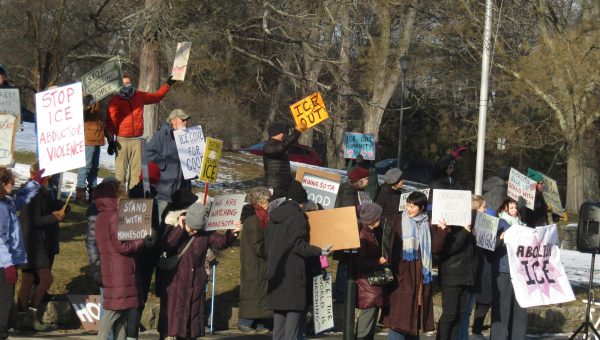
Despite the situation, attendees noted the power of protest to propel positive change.
“I think that [protesting is] the most valuable first step you can take when you see this level of evil going on in your country,” said Trabuco. “Like, it’s so important to get out there and fight for the world that you want to see.”
Others cited growing turnout and enthusiasm at Wellesley rallies as a source of hope.
“The more people who show solidarity with the peaceful resistors, the more power it is,” Little said. “It shows everybody else, and it also shows our politicians, and it shows our judges, and it shows everyone else who even has more power than we do individually.”
Contact the editors in charge of this article: Jessica Chen