On Feb. 8, Puerto Rican artist Bad Bunny made history as the first singer to perform almost entirely in Spanish at the Super Bowl halftime show. This highly anticipated performance unfolded in watch parties across campus, from the Tower TV room to the McAfee common room. The Wellesley News spoke with Professor Petra Rivera-Rideau and Dalice Rodriguez Viera ’26 to unpack the significance of this performance in the context of Puerto Rican resistance and the current American political climate.
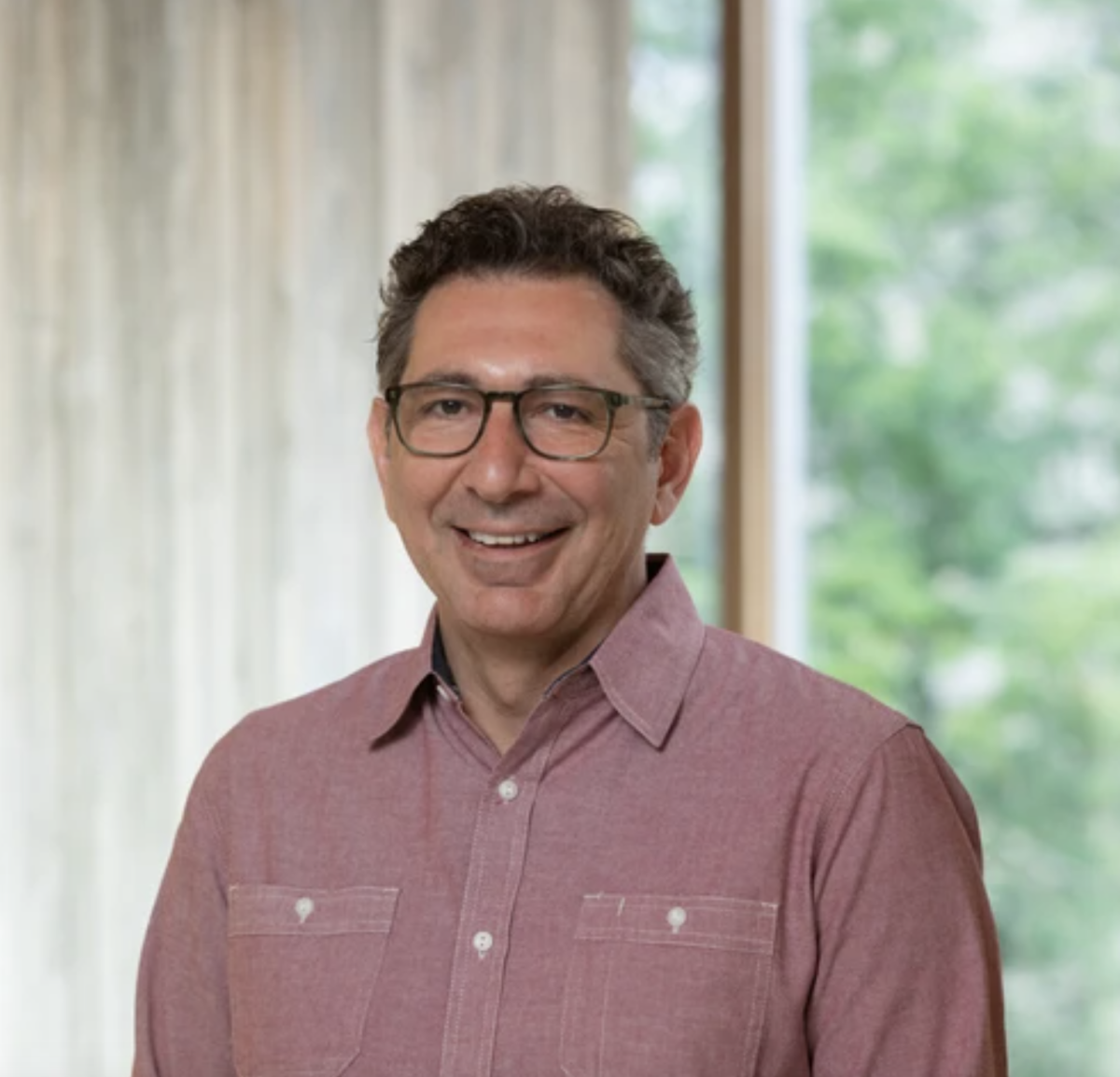
Professor Petra Rivera-Rideau is an Associate Professor of American Studies at Wellesley College, researching Latin music and racial politics, with a specialization in US Latinx popular cultures. She co-authored a book with Vanessa Diaz, published in early 2026, titled P FKN R: How Bad Bunny Became the Global Voice of Puerto Rican Resistance. She also teaches a seminar at Wellesley titled Bad Bunny: Race, Gender and Empire in Reggaeton.
On Bad Bunny’s performance at the Super Bowl, Rivera-Rideau commented, “It’s hard to even articulate how significant it is.” Even removing the show from its current political context, where immigrants are increasingly criminalized for their mere existence in the U.S., she argues that the show is still incredibly meaningful.
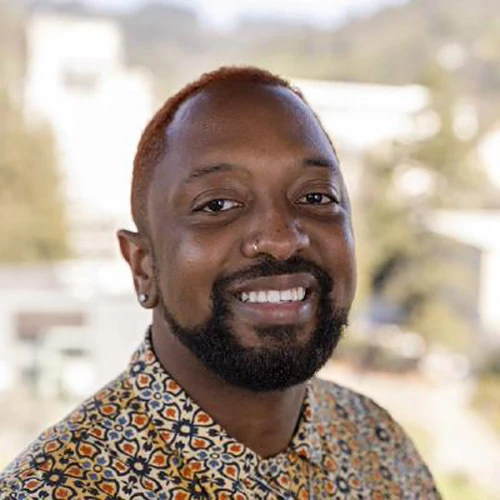
When Rodriguez Vierra was asked how she reacted to the performance, we could feel the joy emanating from her, almost as if we experienced this with her.
“I was overjoyed completely watching the performance and then kind of rewatching it, just tears. Literally just tears — of joy still — but just tears and like this immense feeling of pride. I had the privilege to watch it with my friends…they are all Latinas for the most part, and so it was such a beautiful experience to kind of share that same pride even though none of them are exactly the same nationality,” Rodriguez Vierra expressed. “It made me feel proud to be Puerto Rican, proud to be Boricua, but even more so, proud to be Latina, proud to be a community that loves to dance, that loves to love and that values the community itself.”
Rivera-Rideau shared how she decided to study Bad Bunny in an academic setting and create a curriculum around his body of work, explaining, “As I watched Bad Bunny’s career unfold and I watched my students become much more enthusiastic about him, I decided to create this class that would use his music as an entrypoint to talk about these much bigger issues in Puerto Rican history, like the history of colonialism with the U.S. and the impact of Hurricane Maria on Puerto Rican society and what that tells us about colonialism and environmental justice…Bad Bunny is only 31 years old. He is part of a generation of Puerto Ricans that grew up during this time of extreme austerity measures, like the closure of hundreds of public schools, layoffs of a lot of public employees, the privatization of things like the electrical grid and even the airport.”
Rivera-Rideau went on to explain how Bad Bunny uses his music career to engage in political discourse, even though he doesn’t describe himself as an outright activist. Through lyrical references in his songs, Bad Bunny has “pushed conversations about Puerto Rico into the mainstream that at least have been underrepresented in my lifetime,” she said. For example, El Apagon, which means “The blackout,” was part of Bad Bunny’s 2022 album and criticizes corruption in Puerto Rico and its failing infrastructure in the wake of colonialism. The song was also sung at the Super Bowl halftime show, with Bad Bunny symbolically climbing electrical poles.
Rodriguez Vierra also discussed the incorporation of Ricky Martin in the performance. She explained how this was so significant because Martin almost “lost himself” in his career as a crossover artist, resorting to portraying Latino stereotypes to grow and maintain his fame.
“And here he is, singing in Spanish, almost turning over a new leaf, singing a song in Spanish about colonization and not wanting to lose our culture…And even though I think a lot of people probably didn’t understand the words or didn’t know the message of the song, just the fact that he was singing that song was so powerful and so unexpected…[it is] arguably, the most political song on the album, talking exclusively about the dangers of tourism and gentrification and the fear of losing your culture. So the fact that Ricky Martin was the one to sing about that, with personal experience of losing your culture to appeal to the white audience, to the white gaze, it said a lot.”
Highlighting the impact of Bad Bunny performing on such a well-known stage, Rivera-Rideau pointed out how “The Super Bowl, culturally, in the U.S. functions as a national holiday in the sense that there are many people who have traditions, there are parties, there’s a cultural zeitgeist in the weeks leading up to it. It’s perceived as a stage that’s especially patriotic. [Those who take] the stage are supposed to represent American values in an organization that’s traditionally been very conservative and not trying to be political.”
Rodriguez Vierra also shed light on the significance of Bad Bunny performing at the Super Bowl. Reflecting on the moment when he hands his Grammy award to a little boy, she shared, “When we were younger, we didn’t have this type of representation… Our voice is becoming increasingly heard, so I think it’s beautiful that the younger generation has these role models to look up to, and if people are already paving the way for them, then I could only imagine the amazing things that the younger generation is going to accomplish, and I think that that’s the message he was trying to send there.”
At the halftime show, Bad Bunny challenged racist narratives of what it means to be “American” by singing in Spanish and incorporating real Latinx businesses in the set (the coco frio stand, taco stand and nail salon) to showcase the contributions of everyday Latin-Americans to the U.S.
“He’s putting Latinos at the forefront,” said Rodriguez Vierra. “…his main message of this particular album is ‘Seguimo aqui,’ [which translates to,] ‘We’re still here,’ regardless of the ways that you try to terrorize our communities, regardless of the ways you try to silence us whether it’s in the government or through informal political participation, we’re still here and we’re going to make noise and we’re proud to be who we are. We still embrace everything that makes us, us, and we know the value that we bring to the table.”
According to Rivera-Rideau, “Music in Spanish has been very marginalized by the music industry.” Previous Spanish-speaking performers such as Jennifer Lopez and Shakira, who are known by Americans for their English songs, have performed at the Super Bowl mostly in English. To unapologetically perform in Spanish, at any point in American history, is significant. At the current political moment, where Spanish is being used to profile people and ask them if they are U.S. citizens, where we see Latinos and Latin Americans and immigrants under attack — in this context, it’s even more profound.”
At the end of his show, when all the South American flags are displayed, and Bad Bunny holds up a football saying, “Together, We are America,” he is referencing “Latin American thinkers, politicians, artists who have articulated a version of América (with an accent) that brings together all of South America for centuries. The point of this idea of America is the unifying of the hemisphere, particularly against U.S. imperial aggression, and so he is calling on that long history and thought tradition in Latin American circles,” explained Rivera-Rideau.
Rodriguez Vierra also thought that including the flags was unifying and “…counteracting this narrative that America is only the U.S., that they are kind of the central force of it all, when really, that’s not true…To be American does not just mean to be born here, does not just mean to have your parents born here, does not mean to look a certain way because we all have very crucial contributions to this country and to this region as a whole.”
Contact the editors responsible for this story: Rebecca Birnbach