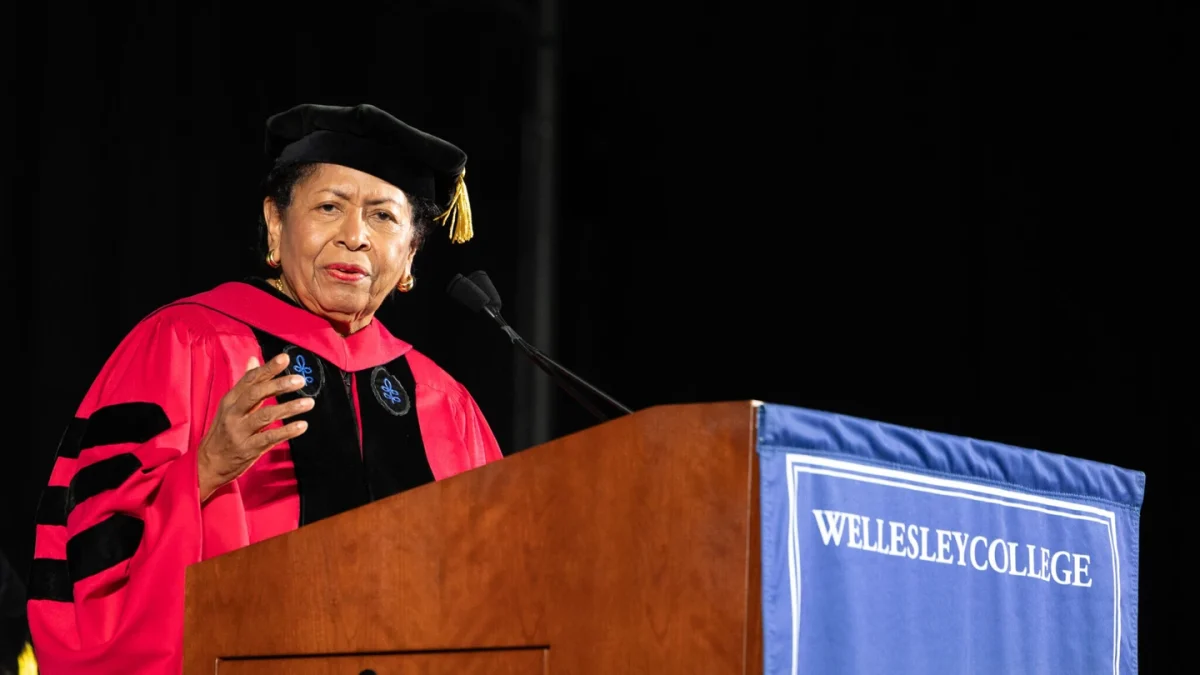
On April 8, in celebration of Latine Heritage Month, Wellesley invited the American Civil Liberties Union (ACLU) National Director of Immigrant Community Strategies, Maribel Hernández Rivera, to Wellesley to discuss her background serving immigrant communities through education, legal support and resource program development.
The discussion, “Caminante No hay Camino Se Hace Camino al Andar: Becoming An Immigrant Rights Advocate,” centered Hernández Rivera’s personal narrative and her path to advocacy coming from a low-income and immigrant background.
Hernández Rivera, who was born in Mexico City, referenced her article “I Was Low-Income and Undocumented, But I Dreamed of College. Now I’m ACLU’s Deputy National Political Director” at the beginning of her presentation.
“If you had told me when I was a kid what I’d be doing now, I could not have understood it and I could not have dreamed of it,” Hernández Rivera said.
Despite Hernández Rivera’s uncertainty about her future growing up due to her undocumented status, she dedicated herself to pursuing higher education, receiving a full ride to Harvard University for her undergraduate education. After graduating from Harvard, she later earned her Master’s degree in Public Affairs at Princeton University and her J.D. at New York University.
As an undergraduate student, Hernández Rivera was heavily involved in the Latine community, serving as President of Raza, the Mexican American organization at Harvard.
“That was my community … those were the people that held me up,” she said during the talk, in reference to her Mexican-American peers in Raza.
Outside of her own immigration journey, Hernández Rivera explained how her father’s journey as an undocumented immigrant influenced her lifelong commitment to defending immigrant rights. Her father, Roberto Hernández, came to the United States for work when Hernández Rivera was very young.
In 2006, while she was working for the Clinton Foundation to establish an HIV-AIDS pediatric clinic in Mozambique, Hernández Rivera’s father died in a vehicle collision. Because of his undocumented status, neither the morgue nor the police notified Hernández Rivera’s family of his death.
“I keep those stories [from my father] in my mind … I couldn’t help my dad, but I want to help people like him,” she said.
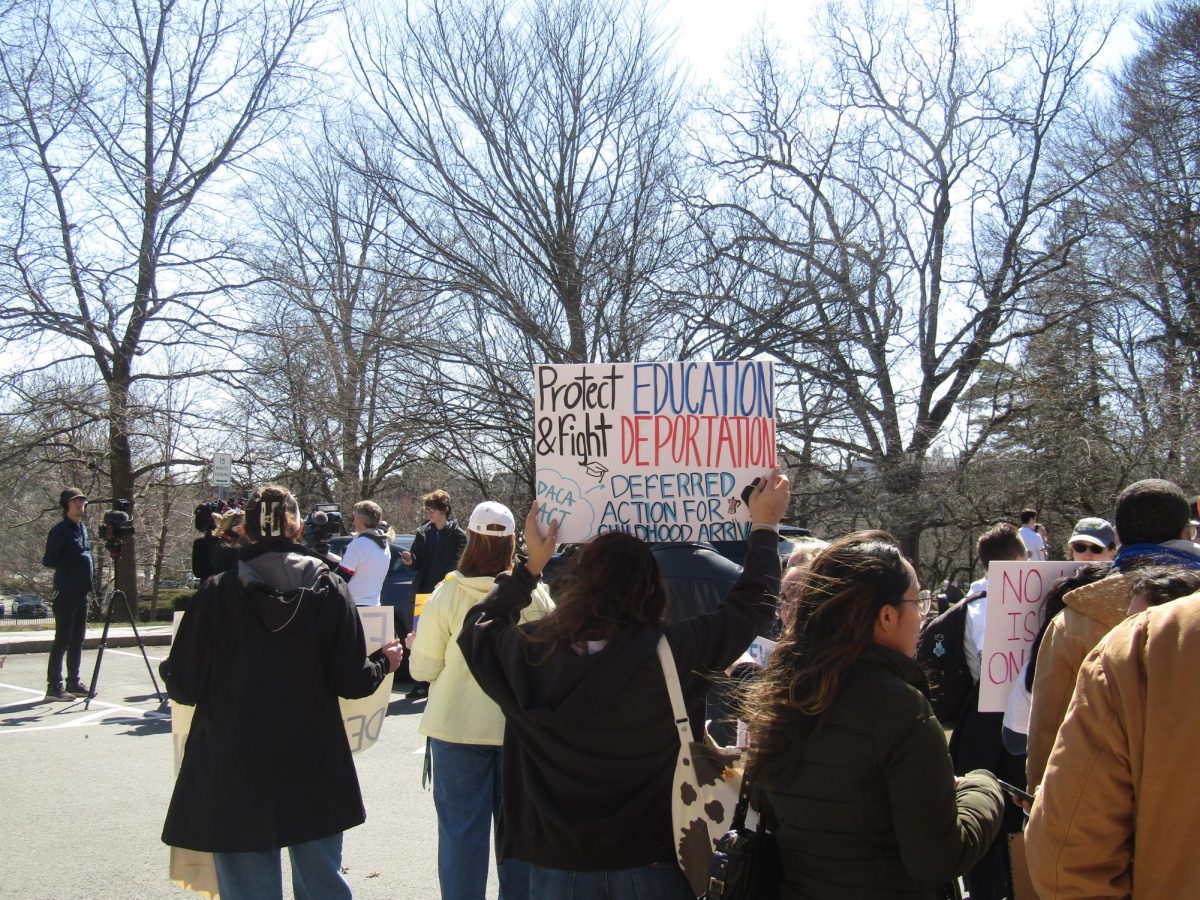
In light of the recent crackdown on immigration, Hernández Rivera encouraged students concerned about their community to organize on campus.
“Caminante no hay camino se hace camino al andar: there is no path, you create your path by walking … I know many of you here are like, ‘How do I get to be that [organizer] if there’s no real path?’” she said. “You find your own path.”
Hernández Rivera hopes that students will continue to be engaged both on and off campus.
“It really requires all of us to be involved in our democracy to protect our democracy. So going out and protesting and joining the No Kings movement is really important,” said Hernández Rivera, who presented a week after the nationwide No Kings protest.
Sophia Trabuco ’29, a student who attended the talk, left feeling optimistic about the future of advocacy in the United States.
“Our country has been going through a very awful time,” she said. “The atrocities against immigrants and xenophobia have been disgusting … knowing that there’s people like [Hernández Rivera] out there makes me think that there is a possibility for change.”
Contact the editors responsible for this article: Dylan Burmeister, Jessica Chen, and Emily Kohler