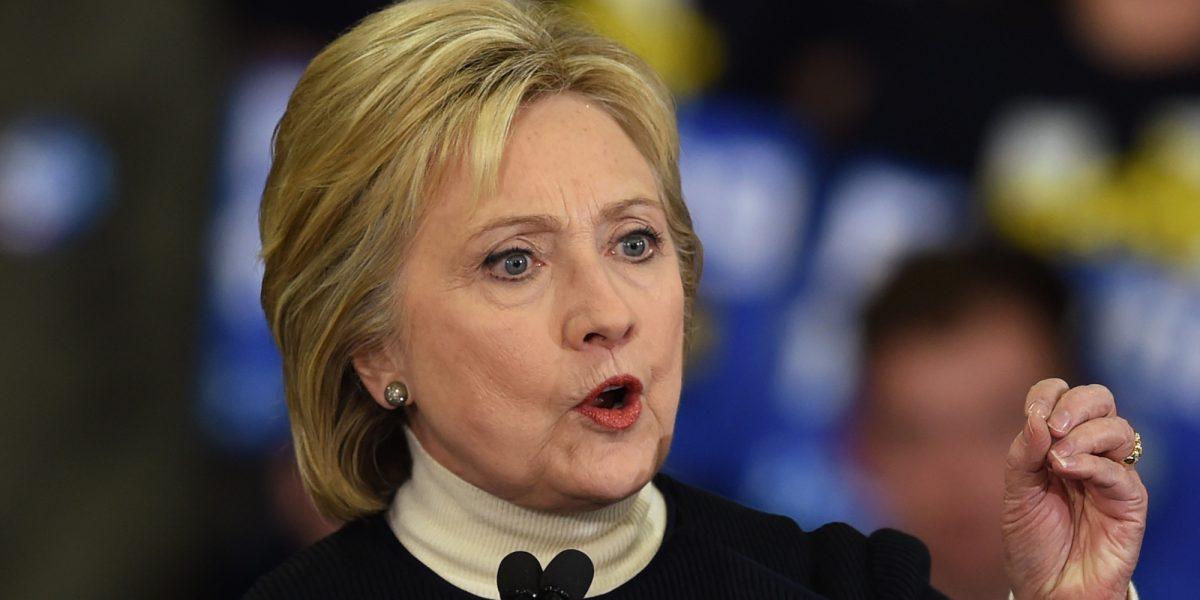
Two weeks before former Secretary of State Hillary Rodham Clinton ’69 returns to her alma mater, Wellesley College, students remain divided over what her presence represents.
An anonymous survey distributed by The Wellesley News to the entire student body found that among the 334 students who responded, 35.6% felt positively about Clinton’s upcoming return to campus, 25.7% felt neutral, 18.6% felt negatively, and 19.5% felt conflicted.
Wellesley will host Clinton on Nov. 1 for the second annual summit of the Hillary Rodham Clinton Center for Citizenship, Leadership and Democracy (HRCC), titled “We the People: Finding Common Purpose.” The College founded the HRCC in 2024 to promote research and discussion on democratic governance and women’s leadership.
Originally scheduled for April 2025, this year’s summit was postponed to this fall due to the WOAW-UAW strike in the spring.
Background (2024 protest and administrative responses)
The inaugural HRCC summit, “Renewing Democracy: Women Leading the Way,” took place on April 6, 2024, aiming to address “the challenges facing democracy in the U.S. and abroad,” according to the College’s website.
Clinton’s visit to Wellesley in April 2024 sparked widespread student demonstrations. Before the summit, students distributed zines and flyers criticizing Clinton’s foreign policy record in Afghanistan, Pakistan, Palestine, Syria, Honduras and Libya, and questioning the decision to name a center on war, leadership, and democracy after her. College administration reportedly ordered custodial staff to remove the flyers the morning of the event, after which students replaced them on residence hall doors and public bulletin boards.
According to the Cabinet Column published in The Wellesley News on April 24, administrators distributed yellow slips to attendees during the 2024 summit, warning that disorderly conduct and/or failure to comply with a College administrator could result in Honor Code charges handled through administrative resolution.
The use of administrative resolution, rather than the student-run Honor Code Council, marked a procedural change that some students said undermined Wellesley’s tradition of student-led accountability and would set a precedent for how the college addresses future demonstrations.
“The administration showed it’s willing to circumvent and, frankly, disrespect student government — particularly the student-run justice process — to enforce its own authority,” said a member of the Young Democratic Socialists of America (YDSA).
During the summit, students also gathered outside the venue holding signs and chanting in opposition to her presence. Demonstrators shouted, “Hillary, Hillary, you’re a liar; we demand a cease-fire,” and held posters reading “Hillary for Women Unless They’re Palestinian.” When the panel neared its conclusion, several students inside the event interrupted the discussion to object to Clinton’s stance on the Israel-Palestine situation and what they described as her lack of attention to violence against Palestinians. Security promptly escorted the students out of the venue, and the event continued without further interruption.
Following the summit, four student protestors were charged with Honor Code violations and eventually placed on academic probation. According to a Class of 2026 student involved in the protest, “Even though the Honor Code Council objected to how the administration handled the case, the administration continued using its own process, effectively overriding the student system.”
An open letter titled “Condemning the Honor Code Charges Against the Disruptors” circulated, gathering 1,339 signatures from faculty, students, alumni, and non-Wellesley supporters. The letter argued that the College’s actions undermined due process and student free expression.
The College Government Cabinet expressed similar sentiments on the use of administrative resolution, stating on April 10, 2024 that “The Code of Conduct ought to be amended to guarantee all students the right to a hearing barring special exceptions, and we should all remember that the Honor Code was originally created to protect the rights of students.”
In an email to The Wellesley News, Chief Justice Elizabeth Chou ’26 wrote about the priorities of the Honor Council regarding student demonstrations and how cases of Demonstration Policy or Disorderly Conduct Policy violations should be addressed:
“Our priorities lie in empowering students and providing routes of restorative justice. This can be difficult amidst differing opinions of how student demonstrations should be handled, but we sincerely believe in the Honor Code process as a means of peaceful resolution. My priority this year is to have students on Hearings and able to meet Council members face to face,” Chou wrote.
Opinions and Expectations on the Upcoming Summit
When asked about why reconvening the Summit this fall despite past criticism from students remains a valuable initiative from the HRCC, Vice President of Communications Tara Murphy wrote in an email to The Wellesley News that the Summit provides opportunities for members of the Wellesley community to hear from a diverse array of scholars and leaders with differing views on a range of issues.
“We don’t expect students to agree with every speaker. Instead, we hope they will be challenged, inspired, and most of all, we hope they learn something about an issue or a way to make a difference in the world that excites them,” Murphy said.
In the survey The Wellesley News conducted, several students emphasized the value of hearing a range of political views in open-ended responses.
“Hearing from a diversity of perspectives — especially educated perspectives — on campus is valuable, even if they’re not ones that align perfectly with Wellesley students’ values. Open, respectful conversations with people from every walk of life are integral to a well-rounded education and a nuanced understanding of the world,” Claire Delany ’29 said.
Some students expressed excitement about Clinton’s return, citing her as a trailblazing alumna.
“I do think that it’s really exciting,” said Alice Graham ’29. “She’s a really prominent figure in culture and a prominent alum. It’s exciting that we’re having such a well-known alum come to campus and show that she still cares about the institution [she] attended.”
Indeed, Clinton has been one of Wellesley’s most notable alumni, with some alums viewing her visit with a sense of nostalgia and respect.
Diane Shieh ’94 said that during her time at Wellesley, Clinton was largely seen as a symbol of pride rather than controversy.
“Back then, we were proud that we had an alumna at that level of national recognition,” she said. “It felt like a moment for women to be seen. She changed what it meant to be a First Lady — she was active, political, vocal. After her, other First Ladies became more proactive about their platforms.”
Reflecting on today’s campus climate, Shieh acknowledged “politics are different now, and discourse around politics is different too.”
Still, she said she sees Clinton’s visit as an opportunity for learning and dialogue.
“When someone disrupts the status quo, things can feel chaotic, but that’s how growth happens,” she said. “She’s a great role model for young women. The challenges she’s faced and the glass ceilings she’s broken should inspire us, not because of her politics, but because of her persistence.”
While some students and alumni view Clinton’s visit as an educational experience and a moment of celebration, others see it as a reminder of what they described as the College’s selective approach to dialogue and dissent. Dagny Hartman ’25 said she believes Clinton represents “an antiquated generation of Wellesley students.”
“She’s the last person who needs to be given a pedestal right now,” Hartman said. “Wellesley needs to evolve past the Hillary legacy. Our value shouldn’t come from powerful alumni, but from the students and recent grads doing meaningful work.”
Echoing that sentiment, members of YDSA are organizing actions to challenge what they see as contradictions in celebrating Clinton’s legacy. In an Oct. 4 Instagram post, the group urged students to “buy a ticket to the We The People: Finding Common Purpose Summit and don’t go.” According to YDSA co-presidents Sanna Walker ’26 and Abby Kubena ’26, the group plans visible but non-disruptive demonstrations — such as leaving seats empty or walking out — and distributing informational zines about Clinton’s record.
“We want Wellesley students to have a greater understanding of the decisions she’s made and the statements she’s given, specifically regarding Israel and Palestine, and how she has supported Israel while minimizing or ignoring violence against Palestinian people,” Walker said.
She claimed that the YDSA’s present goal is twofold: to educate students about Clinton’s record and to encourage the College to think critically about the figures it chooses to celebrate.
“It’s also about posing questions to the administration: about who we choose to celebrate and why,” Walker said. “The way Hillary Clinton is brought to campus isn’t critical. It doesn’t question her record or acknowledge that she may not represent the ideal Wellesley legacy.”
Abby Kubena ’26, the other co-president of YDSA, added that the organization wants to draw attention to what it calls a pattern of selective institutional support.
“Last year, there was a talk about reproductive genocide in Gaza that lost its funding and wasn’t publicized,” Kubena said. “Meanwhile, the College promotes Hillary Clinton’s events without question. The administration says it values dialogue, until it’s not the kind of dialogue they want.”
A class of ’26 YDSA member also pointed out the irony of students facing disciplinary action for protesting when Clinton herself, as a student, participated in the 1968 campus strike against the Vietnam War.
“Unlike Hillary, the disrupters didn’t skip class or even interfere with class,” the student wrote in an email. “They went to an event on the weekend and spoke with courage for what they believed. When Hillary did the same in her commencement address, she became a news sensation. Yet it is Hillary Rodham, the former protestor of American evils and believer in equality, whose presence was used to justify a crackdown on student speech.”
Nafisa Mostafa ’27 also described Clinton’s visit as emblematic of what she called “elitism” within higher education.
“It’s these little things, like, ‘Oh, Hillary Clinton was the first woman to run for president.’ That’s identity politics. What do you actually stand for? Wellesley knows what it’s doing: it’s about money and influence. Everyone’s so career-obsessed and networking-obsessed, but what are you networking with, and what do they stand for? That’s the extra step higher education won’t tell you to take.”
As the Summit nears, students continue to grapple with how Wellesley should engage with one of its most high-profile graduates, raising questions about free expression, accountability, and the values the College represents.
“Instead of framing Wellesley as a place that produces people like Hillary Clinton, we should frame it as a place that challenges students to do better — to make ethical decisions and act with courage and kindness, even when it’s inconvenient,” Walker said. “We should push students to truly embody Wellesley’s values, not conflate those values with Hillary herself. That’s not a big ask.”
Contact the editors responsible for this story: Lyanne Wang