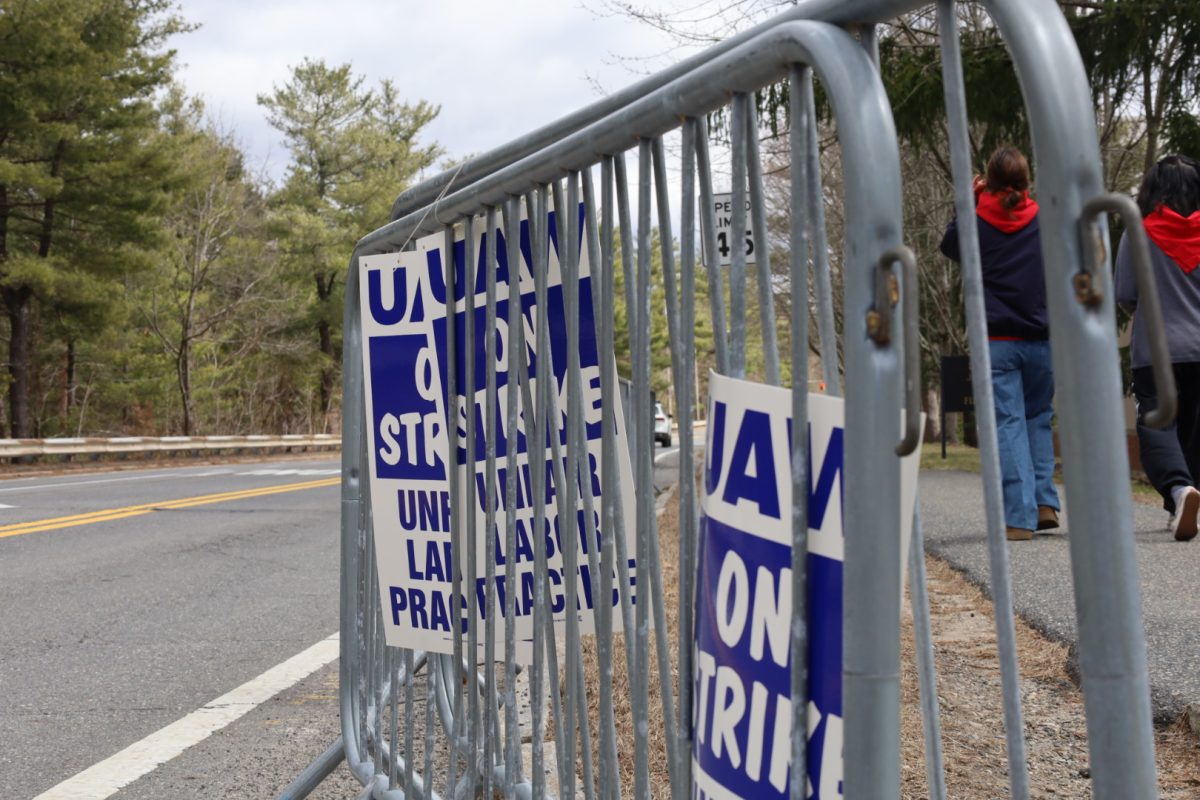
After months of processing and analyzing data, College Government (CG) released a comprehensive report titled “Student Experiences of the Spring 2025 WOAW-UAW Strike: Impacts and Paths Forward” on Tuesday, April 7.
From Nov. 12, 2025, to Nov. 26, 2025, CG collected 782 responses in its survey about how last year’s Wellesley Organized Academic Workers (WOAW) strike impacted the student body.
Beginning on March 27, 2025, Wellesley faculty seeking better pay, job security and manageable workloads led a 29-day labor strike. While the College and WOAW-UAW reached an agreement on Sept. 5, 2025, the student body felt the effects of this strike into the 2025-26 school year.
Specifically, students cited “disruptions to academic progress and content acquisition in major courses” and “prolonged stress, uncertainty and impacts on mental health.”
One student reported feeling “constant uncertainty and stress about graduating, about my GPA and about the well-being of my professors who I cared for deeply.”
This student was not alone: many other students indicated heightened levels of anxiety and stress during the strike related to the status of the non-tenure track faculty.
In turn, CG began conducting a “Student Impact Survey” in November 2025 to quantify these sentiments. During the two-week period, 782 students — about 33 percent of the current student body — participated in the survey.
“Now that the strike is over, we have a responsibility to gain a comprehensive and holistic sense of how students were affected by the strike and its response, in order to move forward in a way that recognizes and responds to students’ needs,” Drondoe wrote.
The survey and subsequent report found the strike impacted incoming students’ perceptions of the school, academic progression — namely specific course credit challenges, enrollment adjustments and lost classroom learning opportunities —, school-wide community emotions and, importantly, institutional perceptions of trust.
In the report, CG noted that one student “was devastated to have lost the opportunity to learn with my classmates and my professors.”
Another felt that, at the time, “there was pervasive anger and fear on campus that was impossible not to notice.”
Among students who were on campus during the strike, 34 percent reported that it had an “extremely negative” emotional impact, while an additional 54 percent experienced a “somewhat negative” emotional impact.
In an interview with the News in November, Drondoe expressed hope that the data will be useful for many groups on campus, including the Offices of Student Wellness and Student Life, senior leadership and various academic departments, as they all work to support student wellbeing in the aftermath of the strike.
The report offers students’ suggestions, including “increased academic support, opportunities for collective processing, partial tuition refund for time not spent in class and increased transparency and involvement in decision-making processes and opportunities for constructive dialogue.”
One student said that during the strike, “after so many students spoke up to what seemed like no avail, I began to feel that senior leadership was not truly hearing us or prioritizing us.”
Another suggested, “students deserve to be a part of the strike aftermath reconciliation process … we deserve to have our voices heard and our questions answered.”
The report highlights “communication” as a more general area for improvement, as respondents to the survey frequently cited confusion and a feeling of exclusion during the strike.
With this report, CG has goals of “addressing actionable concerns, unanswered questions and avenues for action that students identified,” which can then be the “basis for future collaboration, open communication and efforts to ensure student input into institutional policy that concerns our campus experiences.”
Sophie Turansky contributed to interviews.
Contact the editors responsible for this article: Jessica Chen and Lyanne Wang