Sitting down to write an article about the Safeguard American Voter Eligibility (SAVE) Act, I began to think about how I wanted to approach another critical political issue. To briefly summarize, the Act would require that, when registering to vote, voters show proof of citizenship through documents — the acquisition of which is a lengthy, difficult process. It’s obvious that the SAVE Act would disenfranchise voters and is yet another attempt by the Trump administration to violate constitutional rights and reinforce social inequality. It has felt increasingly exhausting to keep up with politics, and trying to find ways to make a difference feels futile. For many of my peers and me, the future feels more and more bleak.
A few weeks earlier, I sat in the auditorium in Alumnae Hall, listening to Robin Wall Kimmerer’s talk, “All Flourishing is Mutual.” While the talk was enlightening and uplifting, the most notable thing I took from Kimmerer came at the end, when one student asked her how we can maintain hope in current times. Kimmerer said something to the effect of, “turn the passivity of hope into the activeness of love.” In other words, it is not enough to hope that things will improve, politically and socially. Too quickly, the news can become a source of nihilistic anxiety.
The way to disempower individuals is to use politics to make them believe they have little to no impact and that there’s nothing they can do to resist violations of their constitutional rights. According to a study published in the Journal of Personality and Social Psychology, Politics has been shown to induce negative emotions and negatively impact physiological and physical well-being. If that isn’t enough, being constantly reminded of the news from social media exacerbates that impact. Having your inbox or social media feed inundated with headlines about yet more violent ICE raids, the war in Iran, the SAVE Act or any other devastating news article can quickly overwhelm. There are simply too many issues for one individual to feel as though they can maintain control over their life and the political world around them. It is only after this inundation that viewers feebly cling to vague notions of hope, or more often, block out the negativity and absolve themselves to an unconcerned, uninvolved life where such negativity cannot permeate.
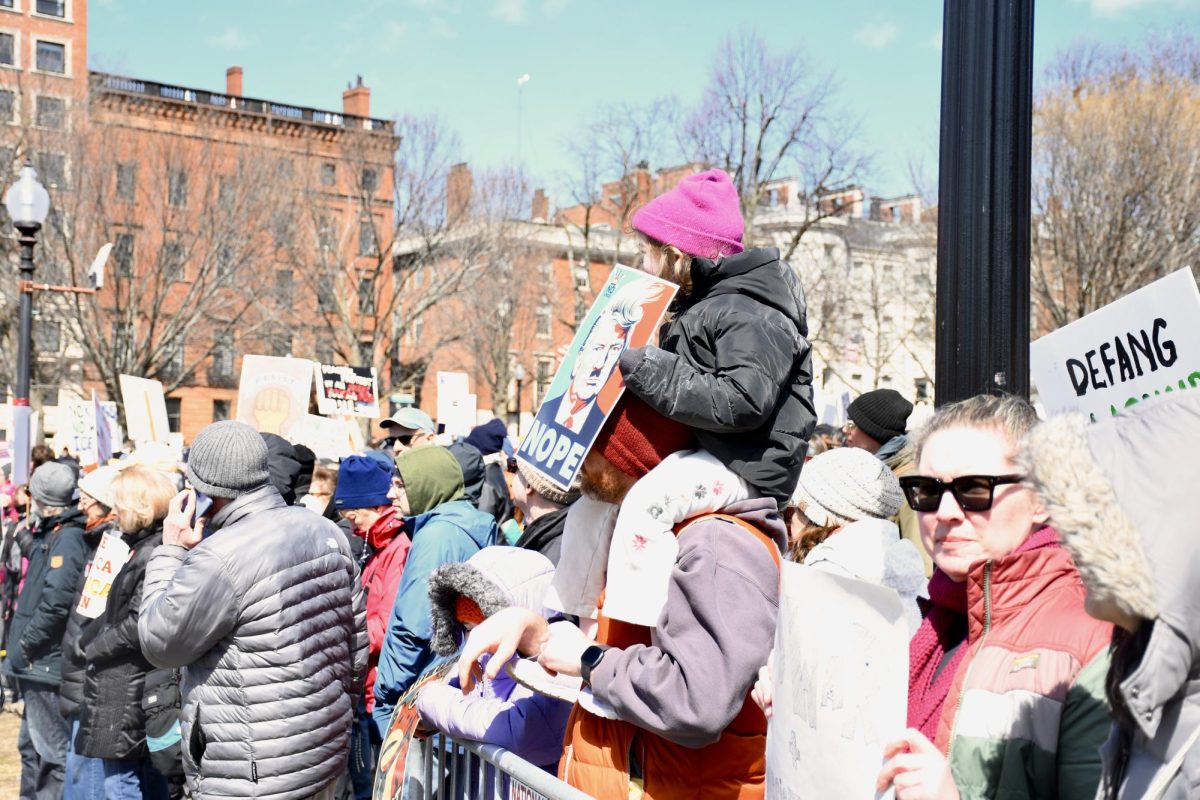
Here, I turn to one more thing Kimmerer noted: “We live in a time where we matter.” The actions we take to combat political uncertainty and to support marginalized communities matter. Pick an issue. Get involved. Instead of worrying about the plethora of ongoing social issues, channeling meaningful energy into activism can have profound effects. There are entire communities that back specific issues and that have the potential to mitigate the isolation and accompanying exhaustion that comes with political activism. Take the collective protests across Minneapolis after the murder of Renee Good and Alex Pretti as examples. Community members like Tracy Wong, a Vietnamese restaurant owner, opened her doors to protestors seeking refuge from ICE. This type of community-based care is what can re-empower people and fuel the change we hope to make.
For Wellesley students, it doesn’t take a lot to remind us that we can find refuge and strength in our community. This hopefully serves as that gentle reminder that student organizations can fill the need for community-based activism, and even something as small as checking in on friends and classmates can have significant impacts. More importantly than ever, our community is something each individual can fall back on in these uncertain times. It is through this kind of community that we can employ Kimmerer’s activeness of love through collective care for one another and action on the issues we care about.
Contact the editors responsible for this article: Caitlin Donovan, Avery Finley