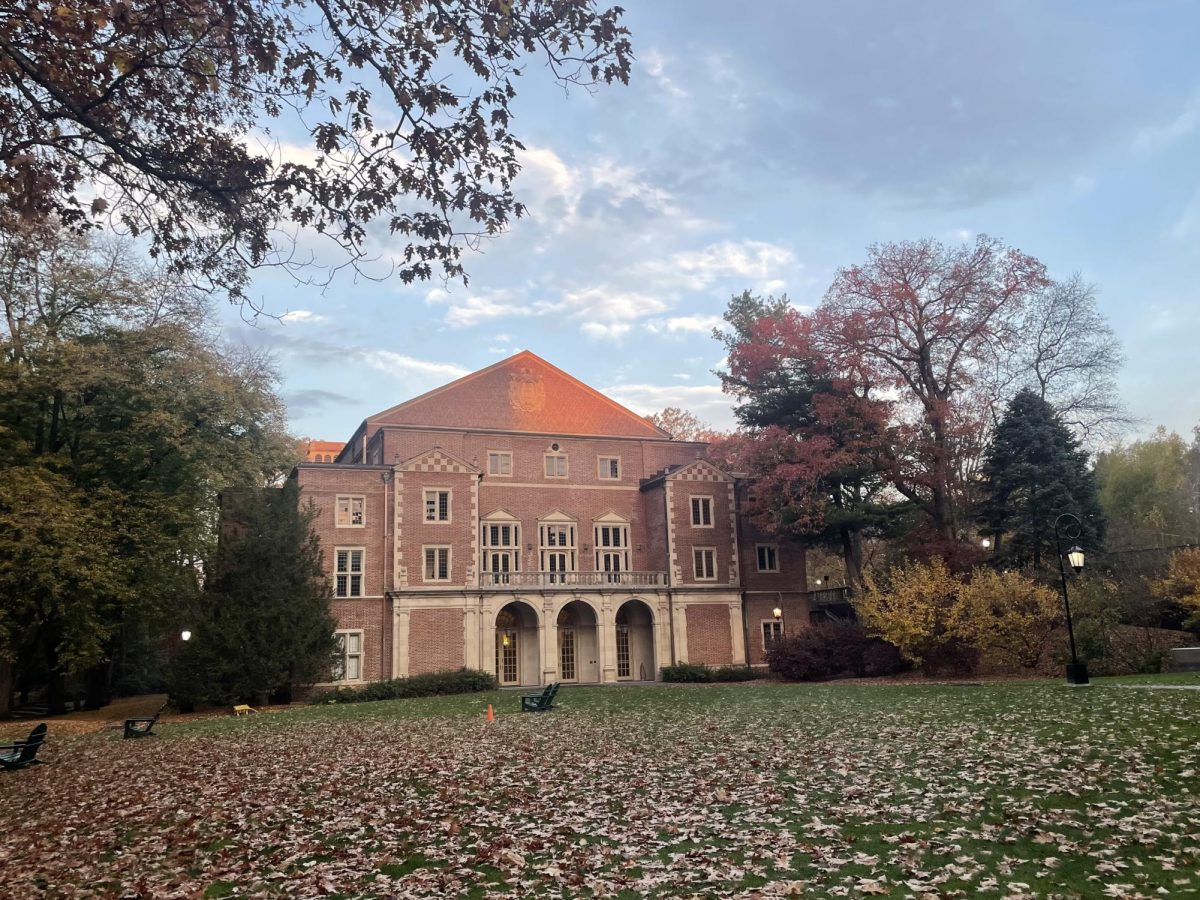
A little more than a week ago, post after post on Sidechat echoed the students’ collective disdain on campus toward the imminent arrival of Hillary Clinton and the “Hillary Rodham Clinton Center for Citizenship, Leadership, and Democracy Summit.” Entitled “We the People: Finding Common Purpose,” the summit has received student backlash for hosting controversial speakers. This aversion to controversial speakers has been a trend among Wellesley’s student body, as seen in this year’s recent protests against Hillary Clinton herself and the 2021 protests against pro-life speaker Kristan Hawkins.
At first glance, these protests have merit. Clinton made controversial foreign policy decisions as Secretary of State and is complicit in, via her notable support, legislation enacted by her husband while he was in office, such as the 1994 Crime Bill. Hawkins is a pro-life activist, which, to many, is a violation of women’s bodily autonomy. Protesting controversial speakers like these is how Wellesley’s student body can express opposition toward certain political views, especially those that seem to violate human rights. Though the goal of hosting these speakers is to mend the widening political divide, to these students entertaining or allowing them to share their views may be more harmful to the student body and wider Wellesley community.
Previously, I considered myself a part of another group of students opposed to controversial speakers. I believed that because these speakers and their views were perceived to be so incendiary by the Wellesley community, no productive conversation could be had. When I heard about the student protests against Hillary Clinton, however, I remembered similar resistance that occurred last year when Clinton was supposed to come for the Summit but eventually did not. I began to wonder if the inability to hold healthy and beneficial conversations stemmed not from the choice to host the speakers themselves but from a liberal hivemind within Wellesley’s student body.
The question at hand is: what would make Wellesley a better place to foster political conversations between opposing sides? Perhaps the answer concerns the type of controversial speakers who have typically been invited on campus. In the case of Kristan Hawkins, her invitation to campus came from the Wellesley For Life club, which could mean that Hawkins’s presence was intended to promote a specific political pro-life agenda rather than foster a conversation about caring for women’s health and rights. After asking other students, including some who have taken part in the Pluralism Initiative, additional insights emerged. They expressed that students on online platforms expressed greater opposition to controversial speakers than students who actually attended these events in person. The latter typically had genuine interest in asking questions and learning about different viewpoints. These participants also mentioned that one key factor in how controversial speakers are received depends on the forum or event. The Pluralism Initiative may be more productive because it is a faculty-driven initiative rather than a college-directed one. These students called into question the College’s institutional neutrality, since maintaining such neutrality comes at the cost of endorsing values or views that are opposed to the people they invite.
This ability to use conversation, especially that which takes place at academic institutions, is the responsibility of multiple entities. First, it is important to take note of where and when these events with controversial speakers take place. In doing so, it allows us to better understand whether these conversations will be beneficial in the first place, or if the intent behind these events is to provoke others. Part of this may be the responsibility of the college or student leaders who organize events for their clubs. For something more applicable to the general student population, one goal may be to create space for others with opposing viewpoints and to develop a greater willingness to engage in uncomfortable discussions with the hope of finding common ground. In doing so, Wellesley can better address greater world issues through collaboration and consensus.
Contact the editors responsible for this article: Caitlin Donovan, Avery Finley