From Oct. 15 to Oct. 17, researchers, democracy advocates, and students gathered at Wellesley College for the “Social Choice: Theory and Computation Conference” hosted by Institute for Mathematics and Democracy, in collaboration with The Wagner Centers for Wellesley in the World.
The conference featured lectures on voting theory, redistricting and citizen assemblies, exploring how quantitative methods can strengthen democratic processes. Notable presenters included Nobel laureate Eric Maskin of Harvard University and Bailey Flanigan of Harvard University and the Massachusetts Institute of Technology, who led a discussion of research directions and perspectives.
Ismar Volic, Director of the Institute for Mathematics and Democracy and one of two Wellesley professors on the organizing committee, said the conference took a year and a half to plan. The team sought to create a broad yet focused gathering to bridge multiple academic disciplines, while maintaining a cohesive theme.
“We wanted to bring together people who worked in…different fields, but everyone works, in some way, in the intersection of math and democracy,” Volic said. “We wanted to…bring everybody together into one giant networking event to share knowledge.”
This intersection involves researchers from statistics, data science, and computer science who “use mathematics integrally in their work,” according to Volic. Computational social choice encompasses diverse topics unified by quantitative research methods.
Day 1: Democracy over dinner
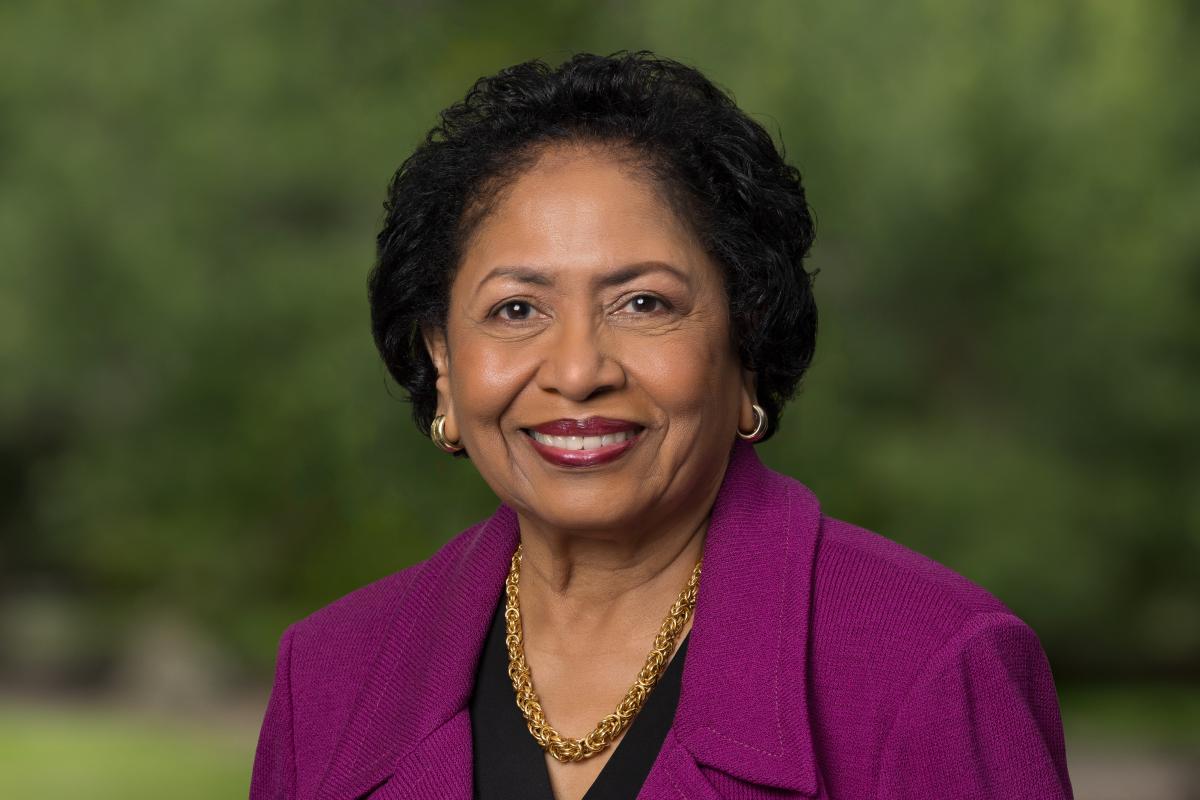
At the conference’s opening dinner event on Friday, President Paula Johnson began by highlighting the importance of research in advancing democratic institutions.
“Thank you for your leadership and organizing this conference, and for really doing the work you…sharing that work in public forums is so important,” she said.
Johnson stated that higher education plays a critical role in providing data-informed solutions to contemporary challenges such as legal battles over redistricting and the spread of AI-driven disinformation.
“Academic freedom allows for the vital function of informing the public debate and provides a deeper and more sophisticated understanding of the issues that policymakers and elected officials require,” she said.
The dinner then moved into a panel moderated by Ismar Volic. Speakers featured included Rob Richie, president of Expand Democracy and former executive director of FairVote. He stressed the importance of applying research to political reform.
“I’ve been engaged in these conversations for a long time because it’s so necessary in making the case to defend your wins…if you don’t have good data, you can’t win the reform,” Richie said.
Ariel Procaccia, Professor of Computer Science at Harvard University, discussed his efforts to bridge theory and practice by creating tools that make research accessible to the public.
“One is called Spliddit, which is a website that makes fair division solutions to everyday problems accessible to the public — things like dividing rent in apartments, dividing goods in case of inheritance, and other applications,” he said.
Alma Steingart, assistant professor of history at Columbia University, spoke about her upcoming book, which explores the conflicting views on the relationship between math and politics.
“I think that the relationship is still very much in the ear of the American press…It’s assumed that the academic research is outside politics and that it’s brought into politics…But we shouldn’t think about it as coming into politics but always inside of it,” she said.
Day 2 and 3: Nobel laureate delivers inspirational talk
The second and third days of the conference involved hour-long talks given by various professors and academics invited to the conference. Maskin discussed his research on mechanism design, a branch of economic and game theory. As Maskin said, mechanism design is centered around the “goals that society wants to attain, and the idea is to try to figure out a mechanism or an institution or a procedure that will attain those goals.”
Maskin highlighted flaws in the U.S. first-past-the-post voting system, where voters can only vote for one candidate, and advocated for Condorcet voting, a method where voters rank candidates and a head-to-head contest determines the election winner.
Maskin also described the challenge of translating technical research for a broader audience. “It’s actually much harder to write for a general audience, a non-specialist audience, because they’re not going to understand the language that professionals use. So I have to think about every word, will this get across? And I also don’t want to oversimplify, to make things simpler than they really are,” he said. He noted that he communicates ideas through op-eds and public talks, aiming to make complex concepts understandable without sacrificing accuracy.
He also emphasized the critical role of academics in political reform. “Most ideas for reform, if you trace them back, go back to an academic. Most ideas come from academia. But it can’t end with academics, because there’s also the very practical problem, how do you get these changes adopted?” Maskin said.
He pointed to the example of ranked-choice voting initiatives in Maine, Alaska, New York City, and San Francisco, emphasizing that public education is key to successful reform. “In order for the public to be willing to vote for change, they have to be educated. They have to understand why the current system, the old system, is flawed, and why the new proposal for reform is better,” Maskin said.
As panels continued through the weekend, discussions ranged from algorithmic fairness and strategic voting to citizen assemblies and participatory budgeting.
Looking ahead, Volic emphasized the conference’s broader educational mission, which extends beyond advancing research.
“Democracy matters when people are worried about it,” he said. “Wellesley students are these kinds of students. You guys are looking for challenging work that has relevance in the world and is interdisciplinary. That’s why I like having brought this to Wellesley.”
Contact the editor responsible for this story: Lyanne Wang