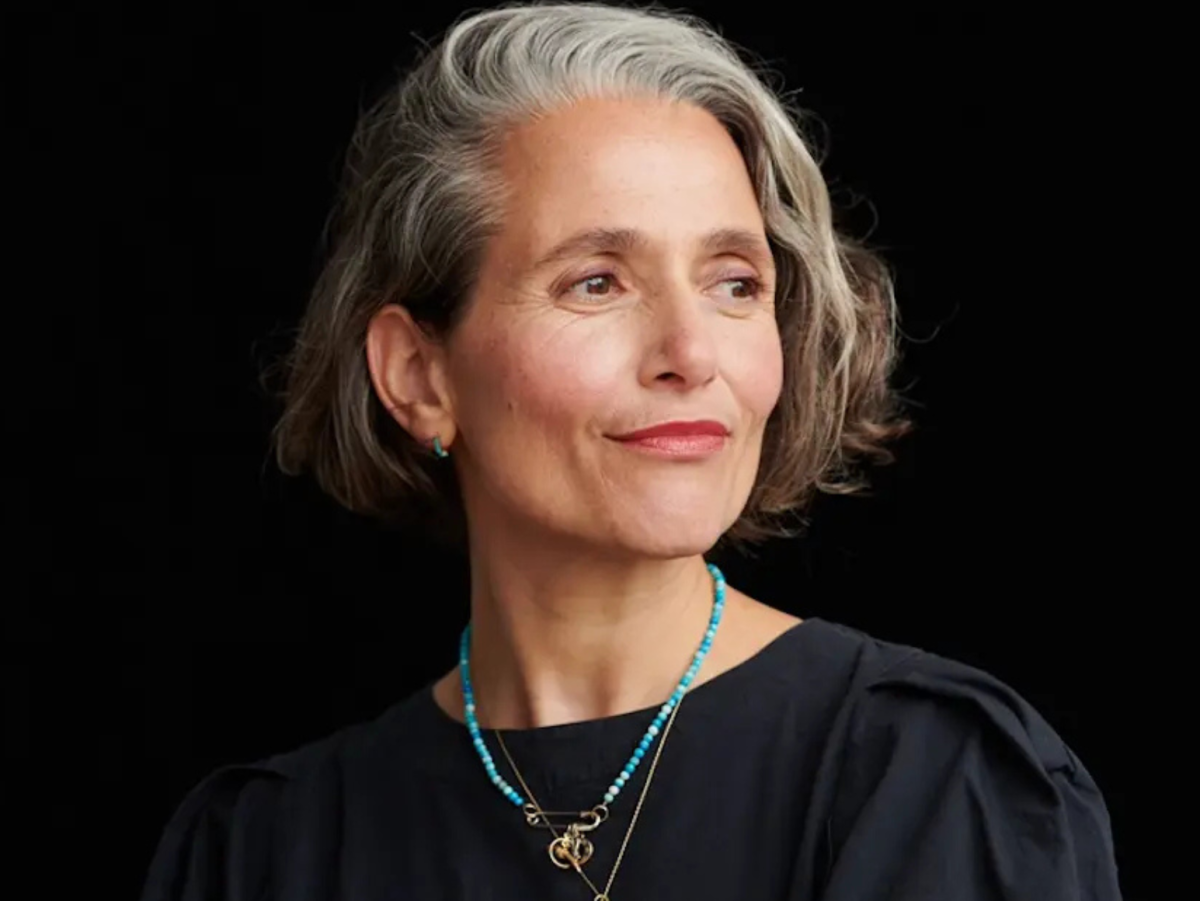
Nora El-Samahy has been acting since the ’90s. Yet she remains a student in many ways. “You are always learning,” she notes, from fellow actors, collaborators and the plays themselves. The groups behind her projects drive her participation in the arts. “It’s a team sport,” she says simply. That ethos is the foundation upon which her latest project is built.
Though it is an incredibly well-known story, the interpretation of Macbeth at the Magic Theatre in San Francisco (written by Migdalia Cruz) redefines the major themes of the story. Rather than 11th-century Scotland, the play is set in New York City in the 1970s. Lady Macbeth and Macbeth are reimagined as a lesbian couple, and the landscape is infused with crime, queerness and cultural upheaval. El-Samahy plays Bank Blow, Macbeth’s sidekick, and emphasizes how the production “flips the entire setting of Macbeth on its head.”

Nevertheless, El-Samahy doesn’t see reinvention as the crux of theater. Instead, collaboration remains the most important aspect of any production. Her favorite moment is the table read, where actors sit together for the very first time and go over the play. It’s where you start “collaboratively coming into a world that you’re going to then be creating and producing.” The stage is a place of possibility, where actors can explore different characters and dynamics in real time, adjusting and transforming with every new performance.
It’s exactly this prioritization of collaborative processes that has continued to have a lasting impact on El-Samahy’s career. She began acting at age seven, with her true career in acting beginning in the Bay Area in the late 1990s. By that point, she felt uniquely drawn to the art, even describing it retrospectively as her “calling.” Still, she didn’t necessarily expect to stay in the acting world for decades. What ultimately kept her coming back was not fame or status, but community.
“At the root of it, I really love creating with people and love to create in a group.”
El-Samahy has found solace in the community she’s developed while in the Bay Area. After first moving to the area, she discovered Golden Thread Theatre, the first American theater company devoted to the Middle East. It was here that she found artists who shared similar cultural touchpoints, and began to feel a “true sense of belonging.” As someone who had “always been in cross-cultural places,” she felt immediately comfortable. “I think a lot of that is based on my upbringing and being a mixed kid,” she remarked.
Even earlier, she found fellowship at Wellesley through the Shakespeare Society. “I think it saved me,” she observes, highlighting the “moral and artistic” analysis that took place while producing plays with the group. At a historically women’s college, El-Samahy was often given male roles and relished the opportunity. The combined opportunities to practice acting, producing, gender-bending roles and deep dives into the various texts gave her a “baseline” that El-Samahy was “happy to have had.”
Her current production feels especially united, because her collaborators are majority BIPOC, many of whom she has known for more than 20 years. This, for her, generates an invaluable level of trust that makes the entire production process feel “relaxed.”
“You just settle into a different place. Everyone has a different process, which is interesting.”
The magic of theater never emerges from one standing alone in the spotlight. It is ultimately born out of the collective act of creating something alongside others. The trust that grows out of years of shared work, explorations that occur during the first table read, small ways that performances can evolve night after night — these are both things to look forward to and reasons to come back. Despite years on stage, El-Samahy stresses that each performance brings something new, and continues to find ways to learn, listen and stay curious. In a profession that seems to emphasize individual recognition, she commits to the principle that theater works better when it works together.
“There is a group with you, not behind you,” she says.
In the spirit of shared creation, she continues to return to the stage, not trying to stand apart, but instead building alongside a team.
Find information regarding the Magic Theatre’s production of Macbeth here.